
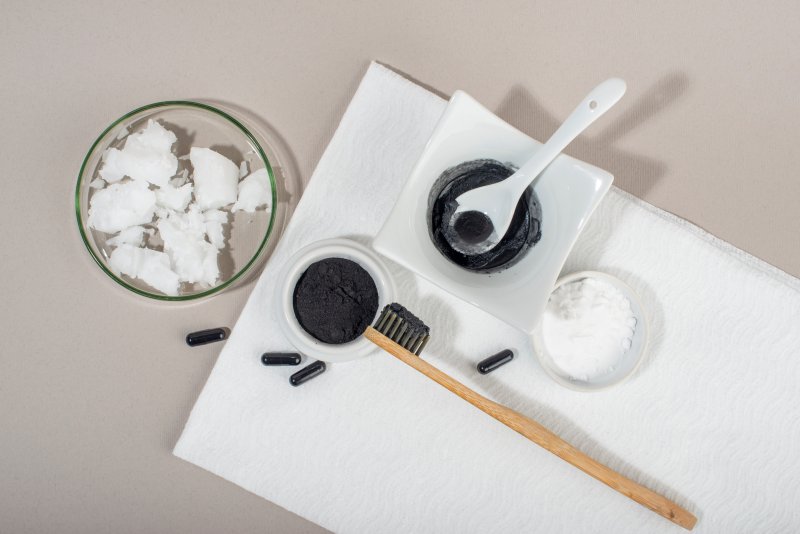
A brighter smile is one of the most common cosmetic goals, and a quick search online yields hundreds of hacks. These DIY methods promise dramatic results with ingredients already in your kitchen—baking soda, lemon juice, activated charcoal—the list goes on. But before you raid your pantry, it’s worth knowing what these methods can actually do to your teeth. Continue reading to discover the dangers of DIY remedies and see why professional teeth whitening is still the safest approach.
Baking Soda: Mildly Helpful, Potentially Harmful
Baking soda is popular as a DIY whitening ingredient, and it does have some logic behind its use. It’s a mild abrasive that can remove surface stains. However, the problem is that “abrasive” cuts both ways. Used too often or too aggressively, baking soda can wear down enamel—the protective outer layer of your teeth.
Once enamel is lost, it doesn’t come back, and the thinner it becomes, them ore sensitive and brittle it is. Ironically, it also exposes the yellower dentin underneath, causing your smile to dull instead of brighten.
Hydrogen Peroxide: Right Ingredient, Wrong Application
Hydrogen peroxide is the active ingredient in professional whitening treatments, but concentration and application make all the difference. The carefully controlled formulas used by dentists can whiten without damaging surrounding tissue—not so much with the unfiltered version.
Straight undiluted hydrogen peroxide can irritate and inflame gum tissue, cause chemical burns, and lead to lasting nerve sensitivity.
Acidic Remedies: Lemon Juice and Apple Cider Vinegar
Lemon juice and apple cider vinegar are praised for their stain-fighting properties, but they’re highly acidic. While acid does strip surface stains, it also wears down enamel right along with it. Regular use of either can cause serious, irreversible enamel erosion that no amount of whitening will fix.
Activated Charcoal: Another Trendy Abrasive
Activated charcoal has had its moment as a wellness trend, and teeth weren’t spared from its influence. In promise, it absorbs stains and toxins from your tooth surface, but in practice, it’s just another abrasive.
There’s little clinical evidence to support its whitening claims, and the American Dental Association has not approved any charcoal dental products. A good rule of thumb? If something claims to “absorb toxins” from any part of your body, put it down.
It’s not hard to see why DIY whitening is popular—it’s cheap, convenient, and seems harmless. However, most of these remedies either don’t do anything or work in ways that damage your teeth in the process. Professional teeth whitening is both safe and effective, so if a whiter smile is your goal, it’s worth the wait.
About the Author
Dr. Haiwen Zhang is a talented dentist who earned his DMD from the Medical University of South Carolina James B. Edwards College of Dental Medicine. Years later, he’s still expanding his skills at the prestigious Pankey Institute and Spear Education. If you’re ready to enhance your smile safely, Dr. Zhang offers professional whitening and a range of other services. Call (505) 372-1121 or click here to book your cosmetic consultation at Juniper Dental.